If you're launching or optimizing an affiliate program, one of your first questions is likely: "What commission structure should I offer?" It's a critical decision that can make or break your program's success. The truth is, there's no one-size-fits-all answer. But there is a strategic framework you can follow to create a commission structure that attracts high-quality affiliates and drives sustainable growth.
A well-designed affiliate commission structure aligns three key interests simultaneously: your business's profitability, your affiliates’ motivation, and your customers’ lifetime value. The right balance helps scale faster, reduce churn, and build long-term partnerships rather than one-off transactions.
Start with Competitive Intelligence
The foundation of any effective commission structure begins with understanding your competitive landscape. Before setting your rates, invest time in researching what your top competitors are offering their affiliates.
Competitive intelligence not only helps you benchmark but also reveals industry gaps. Many programs fail because they copy competitor rates without understanding why those rates exist, whether driven by high margins, brand equity, or limited acquisition budgets.
How to Conduct Competitor Research
Start by identifying the three to five leading competitors in your vertical. Join their affiliate programs, or reach out to affiliates who are already promoting similar products or services.
Ask questions like:
- What base commission rates are being offered?
- Are there performance bonuses or tiered structures?
- What additional incentives exist beyond standard commissions?
- How frequently are payments made?

You can also use affiliate network dashboards (like Impact, PartnerStack, or CJ) to view public-facing rates. Combine this data with conversations from affiliate forums or groups; affiliates often discuss real payout timelines, bonus frequency, and trust levels with specific brands.
The goal isn't to simply match your competitors; it's to position yourself strategically just above them. If the industry standard is a 10% revenue share, consider offering 12% or 15%. If competitors pay monthly, explore bi-weekly or even weekly payment schedules for top performers. This incremental advantage can be the deciding factor when quality affiliates choose which programs to prioritize.
Example: A skincare brand discovered that offering a 10% base plus a bi-weekly payout increased affiliate signups by 25% compared to competitors offering monthly payments.
The Era of Dynamic Commission Structures
One of the biggest mistakes affiliate program managers make is implementing a single, static commission structure for all partners. This approach may have been practical a decade ago, but today's affiliate landscape requires flexibility and customization.
Dynamic structures reflect the reality that not all affiliates drive equal value. A micro-influencer with high engagement but small reach might prefer higher per-sale rates, while coupon or cashback sites care more about volume and speed of payouts. Matching commission models to partner types ensures both sides win.
The 90/10 Rule
Think of your commission strategy in two tiers:
The Standard Structure (90% of Affiliates):
This is your baseline offer: a competitive commission rate that applies to most affiliates in your program. It should be attractive enough to encourage signups and initial promotion efforts. For many industries, this might be a 10-15% revenue share or a fixed dollar amount per conversion, depending on your product pricing and profit margins.
Custom Deals (10% of Affiliates):
This is where the real growth happens. The top 10% of potential affiliates, those who drive significant volume, have established audiences, or possess unique promotional capabilities, deserve personalized commission structures. These high-impact partners can dramatically scale your affiliate channel, and they're worth the investment of custom negotiations.
Think of it as the “Pareto principle” for affiliate marketing: 10% of affiliates often drive 80% of revenue. Treating them as strategic partners instead of traffic sources can multiply performance without expanding your roster.

Building Win-Win Custom Partnerships
When you identify a high-potential affiliate, the conversation shifts from "here's what we offer" to "what would make this partnership valuable for you?" The best affiliate programs think like venture partners, designing offers that support both sides’ growth goals.
Elements of Custom Commission Deals
Top-tier affiliates might request various compensation structures:
- Tiered Commission Rates: Progressive increases based on performance milestones. For example, 15% for the first 50 sales, 20% for 51-100 sales, and 25% for 100+ sales per month.
Tip: Tiered models are great for motivating consistent monthly performance instead of short bursts of activity. - Performance Bonuses: Lump sum payments when specific targets are hit. A $1,000 bonus for reaching $10,000 in monthly sales creates strong motivation beyond per-sale commissions.
- Hybrid Models: Combining revenue share with cost-per-acquisition (CPA) payments, or offering base guarantees plus performance incentives. Hybrid setups are standard in industries where affiliate activity requires upfront effort, like SaaS trials or B2B leads.
- Exclusive Promotional Rights: Higher commissions in exchange for exclusive promotion within specific channels or time periods.
- Extended Cookie Windows: Longer attribution periods (45, 60, or even 90 days instead of the standard 30) that increase the likelihood of commission earnings.
- Recurring Commissions: Especially for subscription-based products, offering recurring payouts creates long-term motivation and keeps affiliates loyal to your brand.
Example: A SaaS company offering 25% lifetime recurring commissions experienced 3 times higher affiliate retention compared to those with one-time payouts.

The Negotiation Framework
Successfully implementing custom deals requires a structured approach to affiliate conversations.
Discovery Questions to Ask
When speaking with potential high-value partners, dig deep into their preferences and pain points:
- What commission structures have worked best for you with other programs?
- What aspects of competitor commission plans do you find most motivating?
- What barriers have prevented you from fully committing to other programs in this space?
- What volume could you realistically drive with the proper incentive structure?
- What additional support (creative assets, data, dedicated management) would help you succeed?
These conversations provide invaluable intelligence that allows you to craft offers your competitors haven't considered. An affiliate might reveal that while a competitor offers higher base commissions, their slow payment schedule or lack of promotional support makes the partnership frustrating. You can address these pain points with a more holistic offer.
Pro tip: Document every negotiation insight in a CRM or affiliate management system. Over time, these insights form a “partner persona” database that helps you predict what motivates different types of affiliates.
Industry-Specific Considerations
While the strategic framework applies across verticals, commission rates and structures vary significantly by industry:
- SaaS and Software: Typically offers 20-30% recurring commissions on subscription revenue, sometimes with first-month bonuses of 50-100%.
- E-commerce and Retail: Typically 5-15% of the sale value, with fashion and luxury goods often falling on the lower end, while niche products command higher rates.
- Financial Services: The cost can range from $50 to $500+ per qualified lead or account opening, given the high customer lifetime values.
- Digital Products and Courses: Often 30-50% commissions due to low fulfillment costs and high profit margins.
- B2B Services: Frequently structured as flat fees per qualified lead ($100-1000+) or percentage of first-year contract value.
Research the norms in your specific vertical, but don't be constrained by them if your business model allows for more generous terms.
For instance, an online course creator offering 40% instead of the usual 30% can quickly dominate affiliate attention, provided the offer converts well.
Also, remember that industry averages evolve fast. Revisit your competitive data quarterly, especially during economic shifts or product seasonality, to ensure your offer remains attractive.
Measuring and Optimizing Your Structure
Once you've implemented your commission strategy, continuous optimization is essential. Track metrics like:
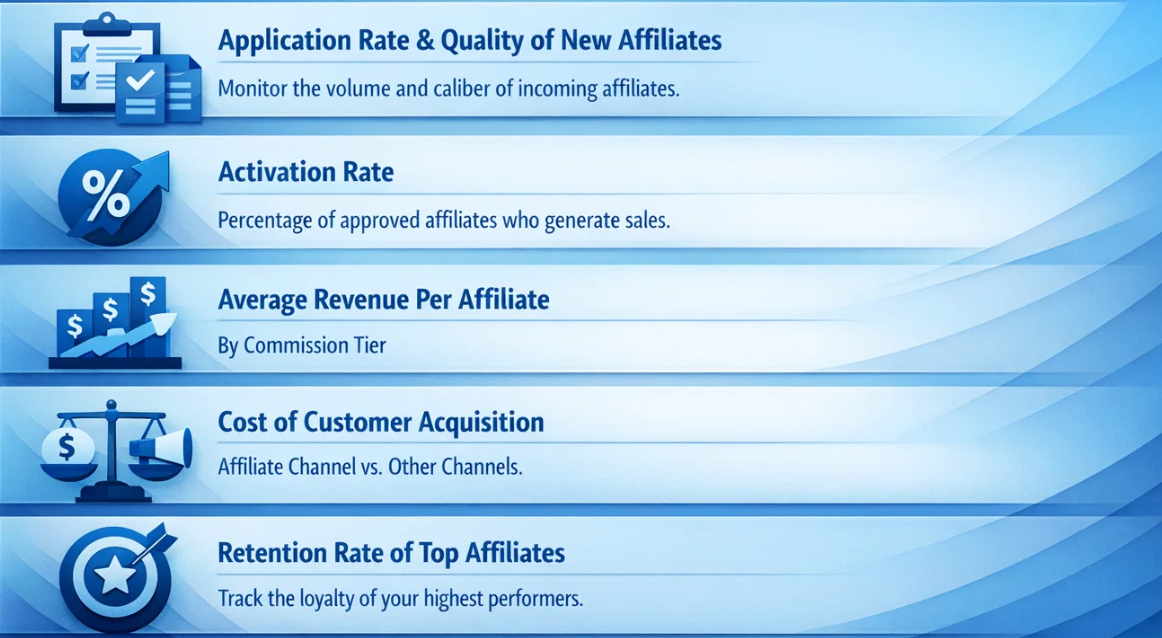
Additionally, track time to first sale and payout velocity; two underrated metrics that signal how engaged your affiliates feel early in the relationship.
Use this data to identify early drop-offs, unprofitable segments, or high-ROI affiliate clusters. Adjusting rates, bonuses, or incentives based on data rather than instinct helps maintain a sustainable ROI as your program scales.
Example: A retail brand discovered that affiliates in Tier 2 (earning 12%) delivered a 40% higher ROI than those in Tier 1. By adjusting incentives toward Tier 2 behaviour, they doubled conversions in two months.
The best commission structure for your industry vertical isn't found in a universal benchmark report; it's discovered through competitive research, built through strategic positioning, and refined through direct conversations with the affiliates you want to attract.
Begin with a competitive baseline that positions you favourably against your primary competitors. Then, embrace the flexibility to create custom deals for high-impact partners who can transform your affiliate program from a modest traffic source into a primary growth channel. The affiliates who can drive absolute scale aren't looking for cookie-cutter offers. They're seeking partners who understand their value and are willing to structure compensation that accurately reflects it.
By combining competitive intelligence with personalized partnership building, you'll create a commission structure that doesn't just work for your industry vertical; it works better than your competitors', and that makes all the difference.
The goal isn’t just to set commissions, it’s to build an ecosystem where affiliates feel like partners, not promoters. That’s when your commission structure stops being a cost center and becomes your growth engine.
If you are ready to build your affiliate program strategically, schedule a free affiliate program strategy and audit call with our team.
.webp)
Achieve profitable growth with a performance-based partner program