If your affiliate program primarily consists of coupon sites generating low-margin sales, you're leaving significant revenue on the table. While discount affiliates have their place, the real growth in affiliate marketing comes from diverse, high-quality partners, i.e., content creators, review sites, influencers, and niche publishers who drive genuine brand awareness and qualified traffic.
The challenge: These premium affiliates won't simply stumble upon your program and apply. Finding them requires a fundamental shift in mindset: you need to treat affiliate recruitment exactly like a sales channel.
The Sales Mindset for Affiliate Recruitment
The most successful affiliate programs don't wait for applications to trickle in. They proactively hunt for the right partners with the same intensity and strategy that sales teams use to close deals.
Consider how your top salespeople operate. They don't sit by the phone hoping prospects will call. They build pipelines, identify targets, craft personalized pitches, and follow up relentlessly. Your affiliate recruitment strategy should mirror this approach exactly.
Pro Tip: Treat every new affiliate lead like a qualified sales opportunity. Assign ownership, track progress, and move them through a pipeline: discovery, outreach, follow-up, negotiation, and activation.
Why Outbound Recruitment Matters
Passive recruitment, simply having a "Join Our Affiliate Program" link in your footer, attracts whoever happens to find you. This typically means opportunistic coupon sites and toolbar extensions seeking easy commission opportunities.
Active recruitment allows you to handpick partners whose audiences align perfectly with your ideal customer profile. You control the quality and composition of your affiliate portfolio rather than accepting whoever shows up at your door.
For example, if you're a SaaS brand targeting startups, you want affiliates like SaaS review blogs, startup communities, and tech YouTubers. If you’re an eCommerce brand, think lifestyle creators, niche newsletters, and authority reviewers in your category.

Building Your Affiliate Hit List
Just as sales teams maintain prospect lists, you need a constantly updated hit list of potential affiliates. This is your pipeline, the pool of partners you're actively pursuing.
Strategy 1: Mine Your Competitors' Affiliate Networks
Your competitors have already done much of the work for you. Affiliates successfully promoting similar products are pre-qualified leads; they already understand your market, reach your target audience, and have proven conversion capabilities.
The Google Search Method:
Run searches for “Competitor Name + review” or “Competitor Name + vs” or “best [product category].”
The blogs, comparison sites, and review platforms ranking on the first two pages of Google are generating traffic and likely earning affiliate commissions from your competitors. These are your prime targets.
Monitor Competitor Mentions:
Set up Google Alerts or use tools like Mention or Brand24 to track when and where your competitors are being discussed online. Content creators writing about your competitors are natural fits for your program.
Bonus Tip: Use SEO tools like Ahrefs or SEMrush to see which websites link to your competitors’ affiliate landing pages or review URLs. Those backlinks reveal the real active affiliates.
Strategy 2: Leverage Affiliate Discovery Tools
While manual research is effective, specialized tools can dramatically accelerate your prospecting process.
Affistash is particularly powerful for competitive intelligence. You can input competitor domains and brand names to discover affiliates actively promoting them. The tool reveals publisher websites, content creators, and influencers you might never find through manual searching.

Similar Tools to Consider:
- PartnerStack Intelligence: For SaaS affiliate discovery
- SEMrush: To identify websites linking to competitors
- BuzzSumo: To find content creators and influencers in your niche
- Social listening tools: To discover creators mentioning your product category
Pro Insight: Discovery tools are most effective when paired with human qualification. Don’t just add every domain you find; review their content quality, audience relevance, and past partnerships before reaching out.
Strategy 3: Target Content Creators by Platform
Don't limit your search to traditional bloggers. High-quality affiliates exist across multiple content platforms:
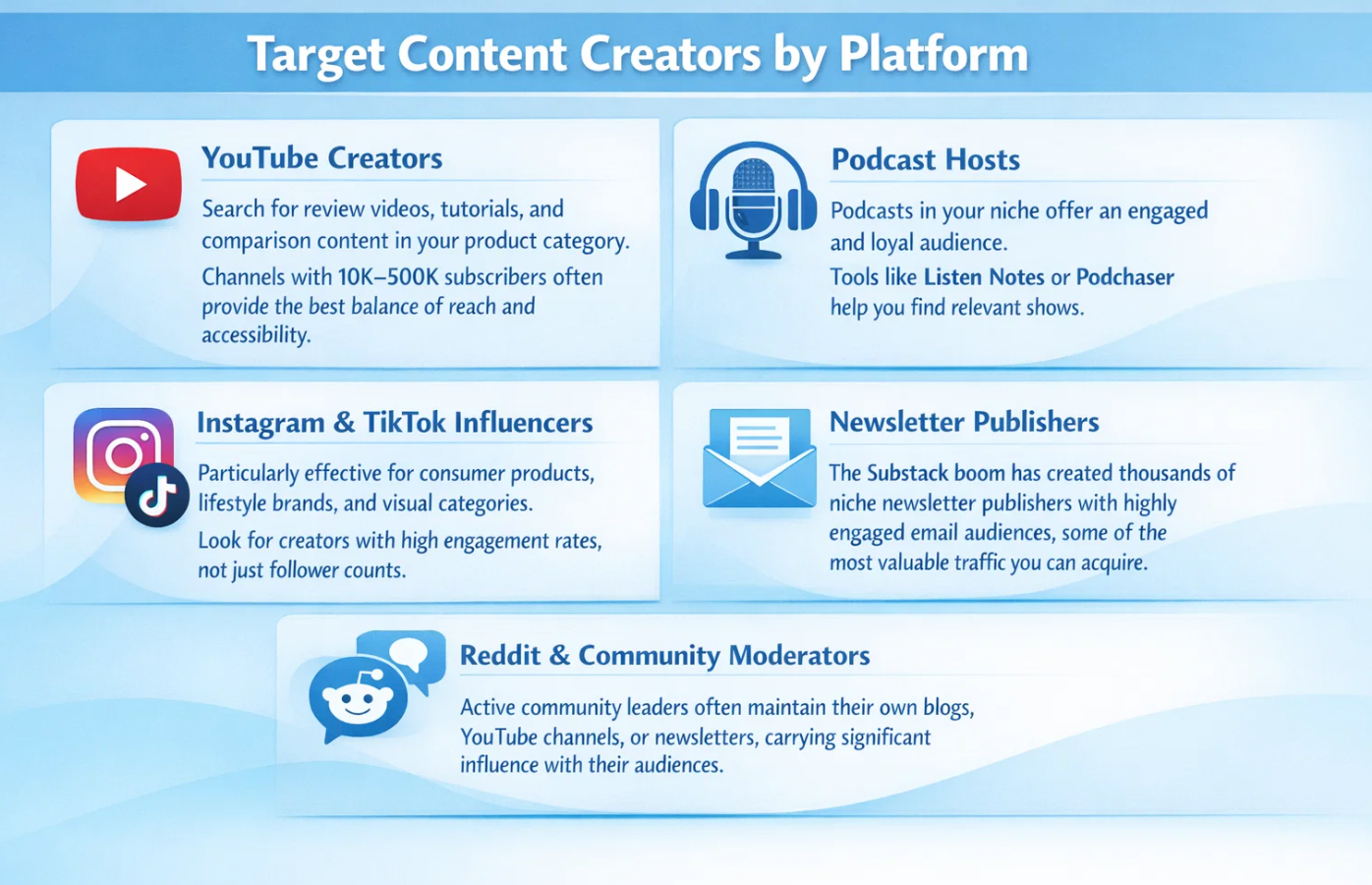
Example: A fintech startup found its top affiliates not through Instagram, but by partnering with personal finance newsletter writers who sent dedicated content to 20K+ readers each week.
The Systematic Outreach Process
Once you've built your hit list, consistent execution becomes critical. Sporadic recruitment efforts produce sporadic results.
Set Weekly Recruitment Goals
Commit to a specific number of new affiliate contacts each week. For most programs, reaching out to 20–30 new prospects weekly creates a healthy pipeline. Track everything: who you contacted, when, through what channel, and their response.
Pro Tip: Set goals for responses and activations, not just outreach. Volume matters less than meaningful conversations that lead to partnerships.
The Tools You Need
You don't need expensive software to start. A well-organized Google Sheet can effectively track:
- Affiliate name and contact information
- Website/channel URL and traffic estimates
- Date of first contact and all follow-up dates
- Status (contacted, interested, negotiating, active, declined)
- Notes from conversations
- Commission structure offered
As your program scales, consider CRM tools like HubSpot or Pipedrive, or affiliate-specific platforms like Everflow or Impact.com, which integrate recruitment tracking with program management.
The Colour-Coded Status System
Implement a simple visual tracking system:
- Green: Affiliates who are live and generating revenue. Your success stories.
- Yellow: Warm prospects—those who've responded positively and are in negotiation or onboarding. These need active nurturing.
- White: Contacted, but no response yet. These require follow-up sequences.
- Red: Declined or clearly not interested. Don't waste energy here, but revisit in 6–12 months as circumstances change.
This visual system helps you prioritize your daily recruitment activities and quickly identify where to focus your energy.
The Follow-Up Formula
Here's the reality that most affiliate managers don't want to hear: one email won't suffice. Research consistently shows that meaningful business relationships typically require 7–12 touchpoints before a commitment is made.
Creating a Multi-Touch Sequence
- Touch 1: Initial personalized outreach email highlighting specific reasons they're a fit
- Touch 2–3: Follow-up emails (spaced 3–5 days apart) with success stories, testimonials, or relevant program details
- Touch 4: Reach out on another channel; LinkedIn DM or comment on their content
- Touch 5–6: More follow-up emails with new angles (new product launches, commission upgrades, seasonal promotions)
- Touch 7+: Long-term nurture sequence (monthly updates, case studies, or new partnership opportunities)
Pro Tip: The goal of follow-ups isn’t to “get noticed”, it’s to add new context or value each time. Show persistence and relevance.
Personalization at Scale
While you can't write completely custom emails to every prospect, you can systematically personalize templates:
- Reference specific content they've created
- Mention why their audience aligns with your customer base
- Acknowledge competitors, they're currently promoting
- Cite performance opportunities unique to them
Even small personalization details can double your response rate compared to generic outreach.
The Long Game Mindset
Building a portfolio of high-quality affiliates is a marathon, not a sprint. The content creator who ignores your first three emails might become your top-performing affiliate six months later when their circumstances change or when you've demonstrated consistent professionalism through thoughtful follow-up.
Pro Tip: Document your conversations and revisit them quarterly. Timing, not talent, often determines who converts into a partner.
Sales teams understand that pipeline development is a time-consuming process. The prospects you add to your hit list today might not activate for months, but systematic, persistent outreach ensures a steady stream of new quality partners joining your program.

Beyond Coupon Sites to Real Growth
Coupon affiliates can be part of your program, and that's okay. But they shouldn't define it. By treating affiliate recruitment as a proactive sales function, building targeted prospect lists, executing consistent outreach, and following up persistently, you'll develop a diverse portfolio of content creators, influencers, and niche publishers who drive premium traffic, build your brand, and generate sustainable, profitable growth.
The affiliates who can transform your program are out there right now, successfully promoting your competitors. Find them, pitch them, and bring them into your ecosystem. Your next top affiliate partner won’t come to you. You’ll have to find them.
If you are ready to build your affiliate program strategically, schedule a free affiliate program strategy and audit call with our team.
.webp)
Achieve profitable growth with a performance-based partner program